Table of Contents
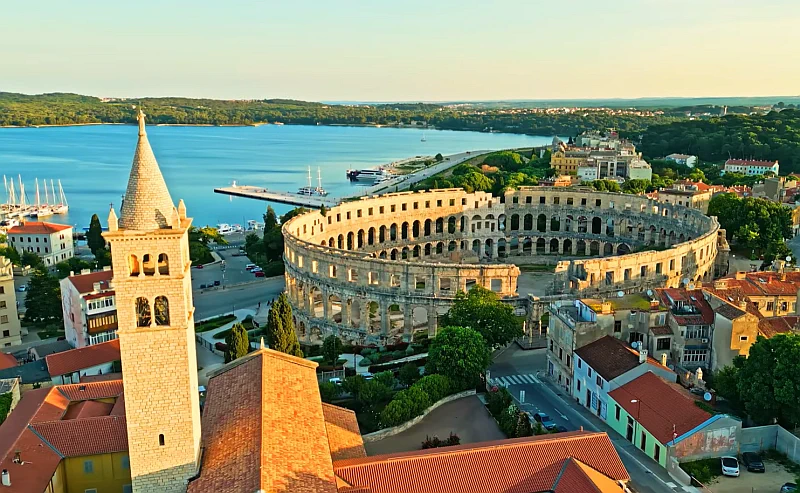
Croatia is a country in Southeast Europe along the Adriatic coastline, known for medieval cities like Dubrovnik’s ancient walls and Split’s Diocletian’s Palace, alongside natural wonders such as Plitvice Lakes and its countless islands — a destination that offers serenity combined with a rich cultural background all in one beautiful package. It is a unique example of what makes this possible, providing a country that has clear blue waters lapping against large ancient Roman-style palaces, and just a short distance from the coast we have heavily wooded forests hiding spectacular waterfalls.
When you visit Croatia you will feel like you are not on vacation but rather visiting a magnificent museum showcasing both ancient and modern history, weaving together the natural environment and the manmade one.


The tour is set up so that each time you leave the mainland to go to the next stop along the coastal highway you will leave behind an area of one geography (the mainland) and enter into a different geographical region (the coast) that is just as breathtaking as the last and that will NOT disappoint.
What historic buildings and coastline charm can I see in Croatia?
One of the impressive aspects of Croatia is its architectural history. In southern Croatia, there is Dubrovnik, which sits at the edge of the Adriatic Sea. This city has been called the “Pearl of the Adriatic” (a nickname attributed to Lord Byron) for a reason; it is surrounded by large stone walls (built from the 7th century onward) and boasts a series of beautiful limestone streets (used for dozens of centuries), making it an incredibly historic city. Continuing up the coast, you will find another noteworthy city, Split, which has an entirely different feel from that of Dubrovnik in that the center of the town was constructed within the ruins of Diocletian’s Palace (the retirement home of a Roman Emperor) that now houses busy cafes and tranquil spaces.
Heading inland from Croatia on the Istrian Peninsula brings an all-new pace to life. The villages of Rovinj and Motovun (the formidable fortress atop the hill) are heavily influenced by their Italian neighbors, showcasing terracotta-tiled roofs, twisty cobblestone streets, and a fantastic foodie reputation focusing on their magical truffle mushrooms.
| Feature | Dubrovnik | Split | Istria |
|---|---|---|---|
| Best for | Historic walled city & coastline | Roman ruins & vibrant harbor | Tuscan-style villages & truffles |
| Vibe | Medieval elegance | Lively urban energy | Rustic countryside charm |
| Must-see | City Walls, Old Town | Diocletian's Palace | Rovinj, Motovun |
| Budget | €€€ | €€ | €€ |
Nature’s Gems


While coastal cities may draw the tourist masses, Croatia’s true wildness is found in her national parks; Plitvice Lakes National Park is arguably her crown jewel. The wooden walkways that snake above the sparkling green lakes are among the most surreal experiences of your life. Krka National Park, while not quite as visually stunning, is even more interactive; the sound of water plunging to create waterfalls is your soundtrack while walking through the park.
If you’re more suited to life by the sea, getting away to Croatia’s islands is a requirement. The striking, harsh landscape of the Kornati Islands is in direct opposition to the lush, piney scent of the island of Mljet. Finally, the island of Hvar provides the unique combination of hidden, quiet beaches and vibrant, luxurious nighttime scenes in one small package.
Editor’s Tip: If your schedule allows, try to plan your Croatian adventure for September. The Adriatic Sea remains perfectly warm for swimming, but the intense summer heat—and the massive crowds that fill the narrow streets of Dubrovnik and Split—have largely subsided, giving you a much more authentic and relaxed experience.
For a more focused adventure, read our guide to the perfect weekend in Dubrovnik.
Quick Facts
- Best Time to Visit: Spring (April-May) or Autumn (September-October) for ideal weather.
- Estimated Budget: €80–150/night for mid-range accommodation.
- Duration: Recommended 3-5 days to fully experience the highlights.
- Getting There: Fly into Dubrovnik (DBV) or Split (SPU); the coastal highway (D8) connects both cities with scenic Adriatic views.
Sofia Mendes
Culture & City Breaks Expert
Based in Lisbon, Sofia is a former photojournalist and polyglot who explores vibrant city breaks, street food, and historic architecture. She shares immersive cultural insights to help readers experience every destination like a true local.
Activities in croatia
More stories from croatia

Best tours for hiking
More hiking
Japan by Mini Campervan: Alps, Ancient Trails and the Izu Coast
Two weeks in the cutest campervan imaginable, winding through the Northern Japanese Alps, walking a samurai-era highway, and chasing waterfalls down the Izu Peninsula.
Top 10 Magical Places to Visit in Cappadocia, Turkey
Discover the magic of Cappadocia, Turkey, a historical region with unique rock formations, cave churches, and unforgettable hot air balloon rides at sunrise.

Van Life at Yosemite National Park
Garret the Nomad spent the day exploring Yosemite Valley — biking, hiking, and soaking in some seriously unreal views.
Book your trip in europe
More from europe
Wild Camping in the Norwegian Mountains: A Scenic Road Trip
Join a breathtaking road trip through the lush green fjords and majestic mountains of Norway. Experience the thrill of wild camping and a luxurious stay in the wilderness.

Switzerland Relaxing Alpine Drive: Interlaken to Grindelwald, Switzerland
Take a peaceful virtual ride on an AMG SL63 Mercedes-Benz through Switzerland's majestic Alps in 4K resolution.

Valentine's Day in Europe: Verona & The Most Romantic Cities
From the legendary streets of Verona to the canals of Venice and the cozy corners of Bruges. Discover the most romantic European destinations to celebrate Valentine's Day.